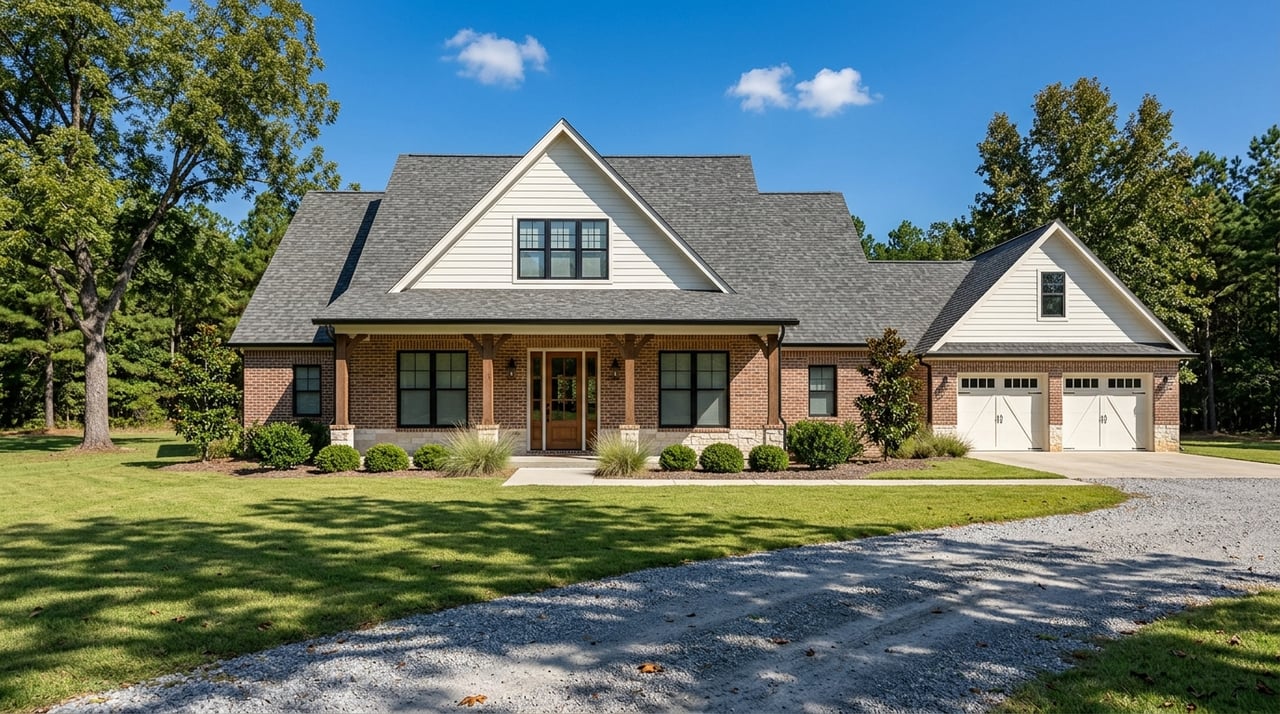
Looking for a home with land near Lonoke can feel like the best of both worlds. You may want more room to spread out, keep equipment, enjoy privacy, or simply have space that is harder to find in a typical neighborhood lot. The key is knowing that acreage buying is different from buying a standard in-town home, and the details matter early. This guide will help you understand what to check before you buy, so you can move forward with more confidence. Let’s dive in.
Why buyers look near Lonoke
Lonoke offers a mix that many buyers find appealing: small-city convenience with easy access to major routes and a strong rural backdrop. The city has a population of more than 4,200 residents and sits along the I-40 corridor with Highway 70 and Highway 31 nearby, while also describing itself as a regional hub for agriculture and aquaculture with close access to Little Rock, according to the City of Lonoke community information.
That setting creates a range of property types. You may find homes on standard lots inside the city, homes with a few acres on the edge of town, or larger rural tracts once you move outside the city limits. For many buyers, that flexibility is exactly what makes the Lonoke area worth a closer look.
Land options near Lonoke
If you are buying a home with land near Lonoke, it helps to think in categories. Some properties are mainly residential homes with a little extra space. Others are better suited for a small homestead setup, while some may be tied more closely to the county’s broader agricultural patterns.
Lonoke County has a strong agricultural footprint. The 2022 Census of Agriculture county profile shows 663 farms and 408,836 acres in farms, with an average farm size of 617 acres. The same report also shows many farms in the 50 to 179 acre and 180 to 499 acre ranges, which gives useful context if you are comparing a modest acreage home site with a much larger tract.
City limits vs county land
One of the first questions to answer is whether the property is inside Lonoke city limits or outside them. That single detail can affect zoning, utilities, and the type of due diligence you need to do.
The city’s development code includes agricultural and manufactured-housing residential districts within the city, and the city states that it does not have zoning authority outside its corporate limits. You can review that context in the City of Lonoke development code and the city community information page. For you as a buyer, that means a property just a short drive apart can come with very different rules and practical considerations.
Why location boundaries matter
Inside the city, public infrastructure and city land-use rules may play a larger role. Outside the city, you may be looking at county acreage where the property feels more rural and where utility and site questions become even more important.
That is why land searches near Lonoke should never focus on acreage alone. You also want to know how the parcel fits into its local jurisdiction and what that means for your intended use.
Utilities can make or break a deal
When buyers picture a home with land, they often focus on the house, the acreage, and the view. In reality, utilities are often one of the first make-or-break issues.
Within the City of Lonoke, the Water Department handles both water and sewer service, and the city says lots should connect to public water and sewer where feasible. If public service is not available or practical, the lot must use a water or septic system approved by the Arkansas Department of Health, based on the City of Lonoke Public Works information.
Questions to ask about utility service
Before you get too far into a purchase, ask:
- Is the home on public water?
- Is the property connected to public sewer?
- If not, does it use a private well, septic system, or another rural water source?
- Are there records showing how those systems were approved or installed?
For acreage properties, these answers affect not only convenience, but also cost, maintenance, and financing conversations.
Septic and soil checks matter
Acreage buyers often assume that if there is enough land, septic will be easy. In practice, septic approval is site-specific and depends on much more than lot size.
The Arkansas Department of Health explains in its onsite wastewater FAQ that there is no fixed minimum lot size for septic. Instead, the key factors include soil suitability, bedroom count, and required setbacks such as the 100-foot setback from water wells. ADH also notes that for a single residence on ten or more acres, a septic permit may be exempt in some cases if all parts of the sewage system are more than 200 feet from any property line, including roads, while still meeting state requirements.
Soil tells you more than a perc test alone
ADH also explains that it relies on soil pits, not just perc tests, because soil evaluation can reveal rock, restrictive layers, and groundwater depth. That matters because those factors can determine whether a parcel can support a conventional septic system.
For you, the takeaway is simple: septic, drainage, and soil suitability should be reviewed together. A beautiful tract can still come with costly limits if the home site area does not support the system you need.
Floodplain and drainage deserve attention
Around Lonoke, floodplain and drainage are not side issues. They should be part of your early screening process for any home with land.
Lonoke County’s flood-prevention ordinance states that FEMA has identified Special Flood Hazard Areas in the county and notes that flooding there is primarily shallow or ponding in nature, typically in Zone A or AE. The ordinance also explains that floodplain development can include activities like clearing, grading, roadway work, and individual water or sewer installations, as outlined in the county flood-prevention ordinance.
What to verify before you buy
If you are considering acreage near Lonoke, confirm:
- Whether any part of the parcel is in a mapped floodplain
- Whether the likely home site is affected by drainage patterns
- Whether access roads, driveways, or utility work could be limited by site conditions
- Whether the usable dry area matches your plans for the property
This is one of the most important parts of land due diligence because the total acreage number does not always reflect how much of the land is practical for your intended use.
Road access is not automatic
Another common surprise with homes on land is driveway access. If a parcel fronts a state highway, you may need more than a simple turn-in off the road.
The Arkansas Department of Transportation says an access driveway permit is required whenever access to a state highway is needed for residential or commercial purposes. Near Lonoke, that matters because of the area’s connection to I-40, Highway 70, Highway 31, and the Highway 89 interchange area.
Why access should be checked early
Legal and practical access can affect how easy it is to build, improve, or even comfortably use the property. If the home already exists, you still want to understand whether the current access is established and whether future changes could require added approvals.
This is especially important on larger or more rural parcels where the road frontage may look simple at first glance but involve state rules in practice.
A smart due diligence checklist
When you are buying a home with land near Lonoke, it helps to treat the process like a checklist instead of relying on assumptions. A little extra homework upfront can help you avoid expensive surprises later.
Here are some of the main items to verify:
- Whether the parcel is inside Lonoke city limits or outside them
- Whether the property has public water and sewer or needs private systems
- Whether septic suitability has been confirmed through the proper channels
- Whether the parcel includes mapped floodplain or drainage-sensitive areas
- Whether legal driveway access is in place, especially on state highways
- Whether the property boundaries and usable homesite area are clearly understood
Because each tract can differ, local guidance matters. Buyers often benefit from early input from an agent, surveyor, lender, and septic or site professional before getting too deep into a contract.
Matching the property to your goals
Not every acreage property serves the same purpose. Some buyers want a manageable amount of land with easier upkeep and quicker access to town. Others want a more rural setup with more separation and flexibility.
Lonoke’s setting supports both kinds of searches. The city combines accessibility with a rural character, while the county’s heavy agricultural presence and the city’s recognition of agricultural land-use patterns mean that one property may feel very different from another, even within the same general area.
That is why the best property for you depends on your day-to-day goals. If you want convenience, public utilities may carry more weight. If you want more land and a rural feel, soils, septic, drainage, and access may become your top priorities.
How Ellen can help
Buying a home with land is rarely just about finding a house you like. It is about understanding the land, the systems that serve it, and the rules that affect it.
That is where a hands-on, local approach can make a real difference. If you want help sorting through homes with acreage near Lonoke, comparing city-limit properties with county land, or narrowing down which questions to ask before you write an offer, Ellen Weiner can help you take the next step with clear, practical guidance.
FAQs
What should you check first when buying a home with land near Lonoke?
- Start by confirming whether the property is inside Lonoke city limits or outside them, then verify utilities, septic feasibility, floodplain status, and legal road access.
How do utilities work for acreage properties near Lonoke?
- Some properties may connect to city water and sewer, while others may rely on rural water, private wells, and septic systems, so you should confirm the setup before moving forward.
Does a larger lot near Lonoke automatically qualify for septic?
- No. The Arkansas Department of Health says septic approval depends on site-specific factors like soil suitability, bedroom count, and setbacks, not just acreage.
Why is floodplain research important for land near Lonoke?
- Lonoke County has identified Special Flood Hazard Areas, and floodplain or drainage conditions can affect where you build, place utilities, or use parts of the property.
Do you need a permit for driveway access near Lonoke?
- If the property needs access to a state highway, ARDOT says an access driveway permit is required for residential or commercial access.
Who can help you evaluate a home with acreage near Lonoke?
- A local real estate agent, along with a surveyor, lender, and septic or site professional, can help you understand boundaries, utility options, access, and other property-specific details early in the process.